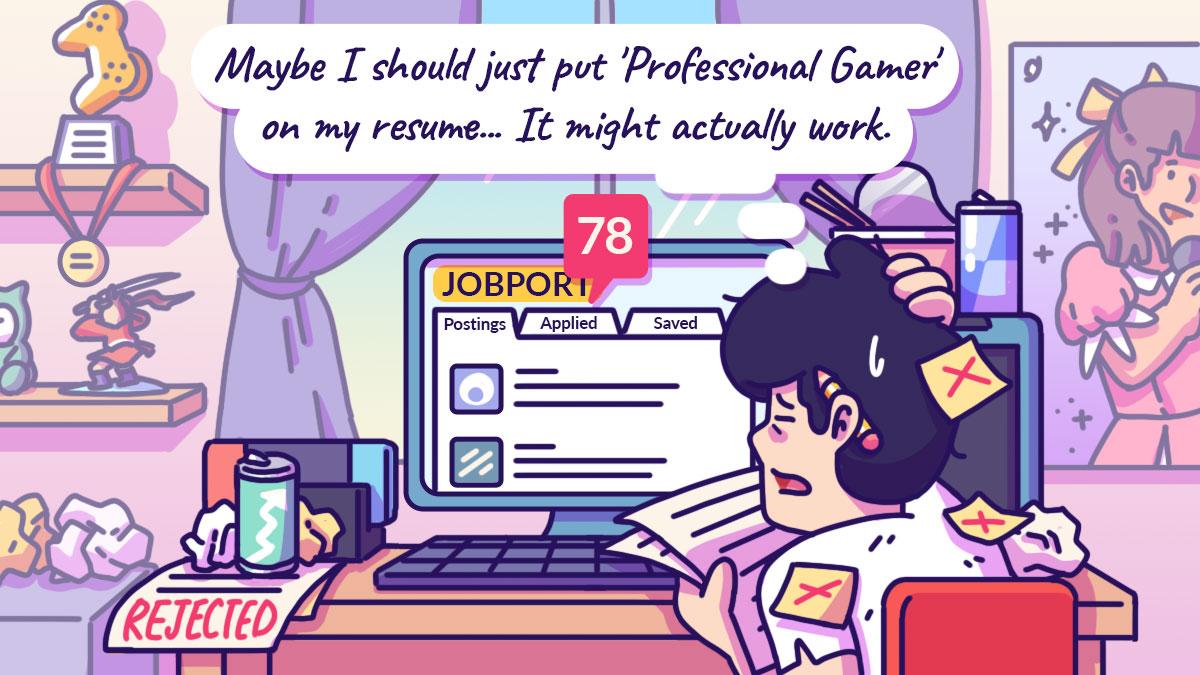
Job hunting is exhausting! Anyone who has ever searched for a job knows just how time-consuming and draining the whole process can be.
First, you scroll through countless job portals and company websites, trying to find the “perfect” match. Then, you are forced to type in all your information into the job portal, even though you have uploaded your resume on the site (why you are made to repeat the steps nobody knows). By that point, you’re completely drained, with little energy left to even click ‘Apply’.
It’s moments like these that make job hunting feel so draining. Fortunately, Artificial Intelligence (AI) is beginning to change how we search for jobs, making the entire process smoother, faster, and far less overwhelming.
Improving your resume and cover letter
With AI, typos, grammatical errors and even awkward sentence structure can become a thing of the past. After drafting your resume, you can use AI to refine grammar, improve clarity, and strengthen your wording. It acts as a reliable second pair of eyes, helping you present your experience more professionally and effectively.
In addition, AI can be used to tailor your resume and cover letter for specific job applications by aligning your skills and experience with each role. A more tailored application increases your chances of standing out to recruiters and getting noticed.
AI can help optimise your resume by incorporating relevant keywords, restructuring content for better readability, and turning responsibilities into clear, impact-driven achievements with measurable results. It can also improve consistency in tone and formatting across sections, ensuring a polished final document. However, it is still important to review and refine AI-generated suggestions to ensure accuracy and authenticity.
Narrowing down potential companies
There are thousands of companies out there, so it can sometimes be difficult to identify which ones might be the right fit for you. Based on your skills, experience, interests, and career goals, AI can help recommend relevant roles and companies that match your profile.
This saves you time and could also introduce you to roles or industries you had not considered before, widening your options.
AI can also assist in researching companies by summarising their culture, values, and recent developments, allowing you to make more informed decisions about where to apply. Some tools can even compare multiple job opportunities side by side and highlight transferable skills, helping you identify roles that may still be a strong fit for you.
Preparing for interviews
Acing an interview takes practice. AI-powered interview tools can simulate real interview questions, allowing you to prepare and refine your responses before the actual interview.
Some tools can also analyse your answers and tone, providing feedback on how you can improve.
Practising with AI can help you feel more prepared, improve your communication skills, and build confidence for real interviews.
Learning new skills
Sometimes, you may come across the perfect job but realise that you do not have all the required skills the company is looking for.
If your skills do not fully match your desired role, AI can help identify what you need to learn. It can also recommend relevant online courses and certification programmes based on your career goals.
This makes it easier to close skill gaps, improve your qualifications, and stay competitive in the job market.
What AI shouldn’t be doing
While AI offers many benefits, it should always be used with caution and critical judgement.
Things to look out for:
- Avoid relying on AI to write your entire resume or cover letter, as this can make it sound generic. Remember: you want to stand out, not sound like everyone else.
- Always review and edit any AI-generated suggestions before using them. Double-check facts, details, and wording for accuracy.
- AI should support your voice and personality rather than replace them. Overusing AI or altering your tone too heavily may create a mismatch between your written application and your real personality. Ultimately, employers value authenticity, and your application should reflect who you are as a person.
Success depends on how AI is used. When used wisely, it can enhance applications, save time, and improve job matching. However, misuse may result in generic or inaccurate outputs that reduce your chances of standing out. Therefore, AI should be treated as a tool to support your efforts, not replace them.