After a few months together, you are feeling good about your partner. They seem capable, responsible, and trustworthy enough to build a future with. They also care about you and treat you well. Yet there is one more thing to check off your list before fully giving your heart to this person: assessing your financial compatibility.
Yes, money conversations with your significant other can feel like a buzzkill, or a potential landmine that can be set off if approached carelessly. However, these discussions are essential as they reveal your partner’s money mindset – something that can make or break a relationship.
There’s no need to rush through these questions in one sitting, as that may feel more like an interrogation than a conversation. Instead, you can spread them out over time and create a safe space where your partner feels comfortable opening up.
Once they do, you’ll gain a clearer picture of whether your financial expectations are aligned.
1. Are we splitting expenses 50/50 or based on income?
Every couple has their own approach when it comes to splitting expenses. Take meals, for example: some prefer splitting the bill evenly, others would rather pay for what they ordered, and some take turns treating each other.
The same goes for shared expenses such as groceries, utilities, and rent. How you handle money now often sets the precedent for how the two of you will handle finances in the future. That’s why it is important to voice any frustrations you may already have about your current arrangement.
It is natural to feel that splitting expenses 50/50 is unfair if one partner earns significantly more. It also means the other will be left with less savings. One way to fix this issue is to split expenses based on income.
For instance, if you earn $6,000 while your partner earns $3,000, you can consider paying a larger share of the bills, since your income is higher. This approach helps prevent financial strain and allows both of you to save and work towards shared goals together.
2. What is your current debt and emergency fund situation?
Debt is a common part of most working adults’ lives, and it is nothing to be ashamed of. But when it is ignored or poorly managed, it can easily disrupt the financial future you are trying to build together.
Knowing the size of your partner’s debt and how they manage it gives you a clearer picture of their financial discipline. Someone who pays their dues on time and avoids late fees demonstrate responsibility when handling credit.
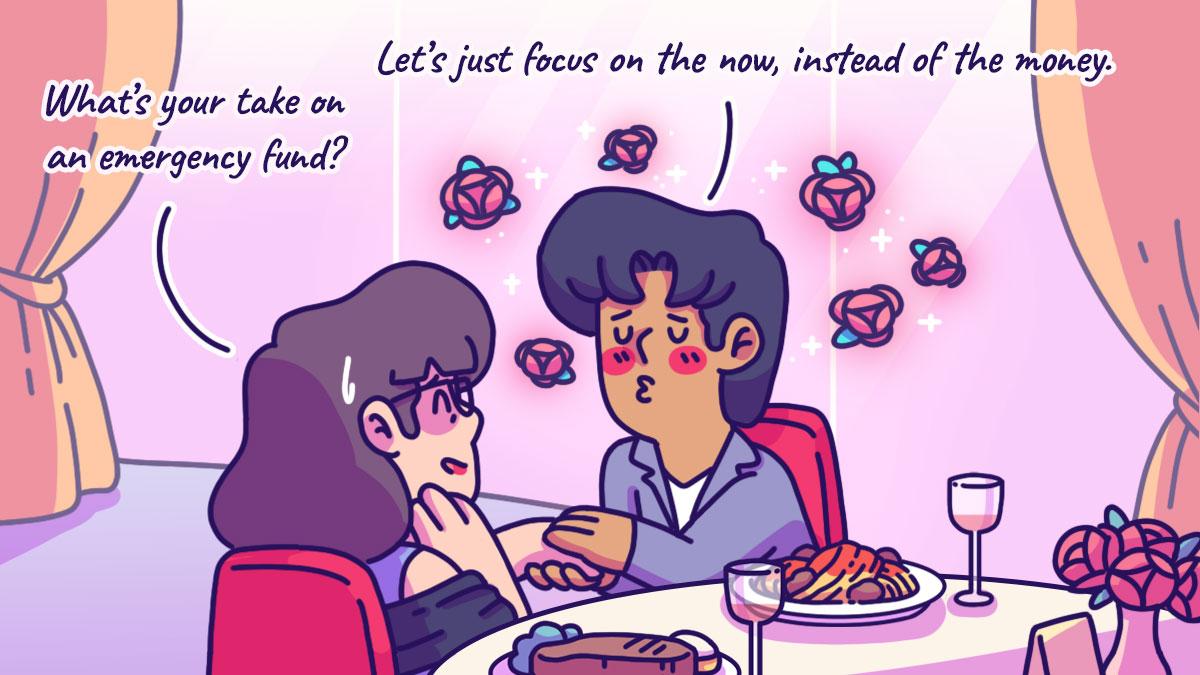
You can also ask them whether they have an emergency fund. Having one shows that this person values foresight and is prepared for unexpected events such as job loss or medical emergencies. But if they have not built theirs yet, giving your partner time to save and reach that goal is just as important.
Everyone’s financial situations are different, and certain circumstances, such as family, college loans or inconsistent income, can delay a person’s ability to meet their financial goals.
3. How did your parents handle money?
As the saying goes, “the apple doesn’t fall far from the tree.”
Although there are exceptions, how your partner’s parents manage their money can be reflected in your partner’s financial habits. For example, if their parents are savers, there is a higher chance that your significant other values saving over spending.
Understanding their parents’ approach to money can also give you an insight into whether you and your partner may potentially need to support them financially later on. While many parents now have their own retirement funds, some still rely entirely on their children for financial support.
4. Is home ownership important to you?
Asking your partner if they are planning to buy a house in the future may seem like a simple question, but the answer can reveal far more about their financial priorities and long-term plans.
People have very different views when it comes to real estate – some see homeownership as security, while others view it as a contractual obligation that limits flexibility. Because mortgages are a long-term commitment, your partner may prefer the flexibility and mobility of renting.
5. If one of us stops working, how would we handle finances?
There may come a time in the future when one of you is out of work, whether by choice or by circumstance. If that happens, both of you will need a practical plan to continue covering your shared expenses smoothly.
Ideally, an emergency fund should be able to support you for a minimum of three months. But if those savings are drained, the real question becomes whether your partner is willing, and financially able, to provide temporary support while you get back on your feet.
If you plan to have children – and one partner chooses to stay home to care for them – you’ll need to have an honest conversation about what your joint finances would look like. When one person steps away from paid work, income becomes unequal overnight. But while financial contribution may change, the value of contribution does not. Childcare and household management are real work, just unpaid work.
Therefore, do not underestimate the importance of sorting out your money dynamics early on, as it can do wonders for your future together.
While these questions may sound intense, they are not meant to audit your partner. They are about building transparency before your lives become intertwined. It is not about achieving equal incomes, but about aligning your values and building your shared financial goals together.